
Okay, quick honesty: I used to juggle three wallets like some frantic stagehand. Wow. It was messy. My instinct said there had to be a better way — fewer tabs, fewer mental context switches, fewer “wait did I approve that?” moments. At first I thought a single wallet would be inherently riskier, but then I dug in and found trade-offs I didn’t expect. Something felt off about the usual “one-size-fits-all” pitch, though I’ll admit I was hopeful.
Here’s the thing. Multi-chain isn’t just buzz — it’s painful when your tools don’t respect the nuance. Medium-sized chains, rollups, Layer 2s — each has quirks. I kept hitting gas-estimate surprises and weird nonce issues. Seriously? Yes. My workflow needed simulation, clearer UX, and better network hygiene. So I started using rabby wallet as a primary lens to test a few patterns: transaction simulation, account isolation, and chain switching ergonomics. Initially I thought it would be another minor tweak, but then realized it changed how I reason about on-chain operations.
Quick gut take: rabby wallet is quiet but effective. Hmm… not flashy, but deliberate. It gives you transaction simulation and multi-chain support without gagging your browser or shoving a million popups in your face. On one hand it’s a convenience play; on the other hand it reduces a class of user errors that are surprisingly costly. And okay, I’m biased — I’ve lived through a failed cross-chain transfer that cost me time and a little dignity.
What actually matters for DeFi power users
Short answer: predictability. Medium answer: predictability plus control. Long answer: predictability plus control plus context — meaning the wallet must tell you what that signature will do, simulate the gas and potential reverts, and let you sandbox accounts without mixing identities. My workflow now uses a primary “working” account and separate vaults for experiments. Sometimes I trade from a hot account; sometimes I approve contracts from a cold-ish account. It’s a pattern that feels simple, though it’s formed by experience and a few burned moments.
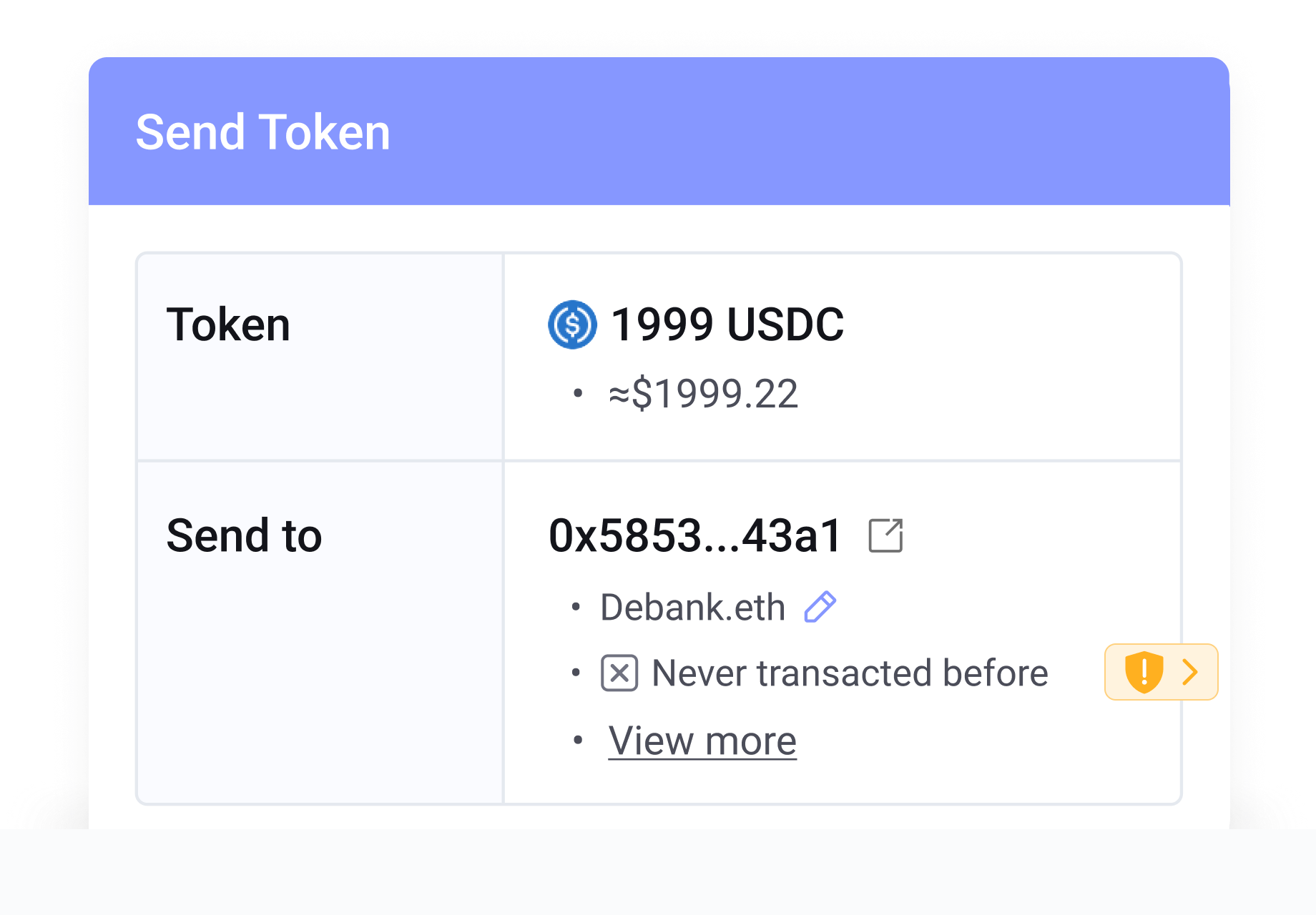
One of the neat parts about rabby wallet is the transaction simulation. Whoa! Seeing a preview of potential contract calls before you sign—especially on complex DeFi interactions—changes behavior. You think twice. And again, it’s not perfect. There are edge cases when nodes return stale state, or when relayers behave oddly, but the simulation adds a safety net that matters in real trades.
On a technical level, that simulation works by constructing the intended call locally and estimating execution against a node’s current state. There’s nuance: if the node’s mempool doesn’t reflect pending state (like unfinalized approvals), simulation might miss certain race conditions. Still, it reduces a large chunk of accidental approvals. I learned to take the simulation as a probabilistic signal rather than gospel truth—actually, wait—let me rephrase that: treat it like an early warning system, not an oracle.
Installation flow — rabby install and real-world friction
Okay, so installing a wallet extension should be boring. Right? But it’s not always. The rabby install path was smooth for me on Chrome-based browsers. Short steps. Clear prompts. The extension guides you through seed creation and account segregation in a way that doesn’t assume you’re a newcomer but still helps if you are. That middle ground is rare and welcome.
My first impressions were: clean UI, sensible defaults, clear network switching. Then I started pushing it — bridging, interacting with Layer 2s, signing meta-transactions. A couple things popped up: some sites still detect only MetaMask and jumble UX; (oh, and by the way…) you may need to manually connect or enable site access in rarer cases. But overall, the install was less friction than reconfiguring multiple wallets and rebinding to the same dapps.
Also, the multi-chain handling is practical. It doesn’t try to hide the chain differences. Instead it shows you which chain you’re on, and it warns when a transaction will move you off a typical preference. That small detail saved me from one accidental Polygon payment when I meant to be on Arbitrum. Tiny wins like that pile up.
Security model — realistic, not theatrical
I’m not hawking paranoia, but I’m cautious. This part bugs me: a lot of wallets advertise “bank-grade” security and then make their UX impossible. rabby wallet has pragmatic security features — account isolation, clear signing prompts, and explicit approval revocation screens. I’m biased toward “usable security” because if it’s unusable, people bypass it.
Let’s be clear though. No extension wallet is a cold wallet. Treat it like warm storage that you use for active strategies. If you’re doing life-changing cold storage, use hardware. But for active DeFi positions across chains, rabby provides a usable set of mitigations. For example, when you approve a token, it surfaces the exact allowance, and it helps you set a precise cap instead of blanket infinite approvals. That one habit alone saved me from two nasty approvals that slipped in via phishing sites—seriously.
On the downside: browser extensions are still browser extensions. They inherit the browser’s threat model. Keep your OS patched, your extensions minimal, and use a hardware signer for very large ops. I’m not 100% sure the average user does that, which is why wallets that promote clearer approval boundaries matter more than ever.
Workflow examples — how I use it day-to-day
Example 1: Yield farming across rollups. Short process. Connect account. Simulate tx. Approve token with a capped allowance. Execute. Monitor. If anything weird appears, revert allowance. This loop is fast and less error-prone with simulation than it used to be.
Example 2: Gas-optimized front-running checks. Medium complexity. I simulate trades to see if slippage or reverts are likely. I’ll sometimes re-run the simulation against a public RPC with slightly different mempool visibility to stress-test the expected outcome. It’s messy, but the mental overhead goes down when your wallet gives you actionable signals rather than vague warnings.
Example 3: Account separation for testing. I create ephemeral accounts for contract interactions that might be risky, keeping my core funds in separate accounts. Yeah, it’s extra steps. But it reduces blast radius. And honestly, that ritual feels good. It’s like putting on a seatbelt—even if you rarely need it, when you do, it’s priceless.
Where rabby could improve (because nothing’s perfect)
On one hand, its simulation is great. On the other hand, some RPCs return inconsistent states. So simulation can be less reliable for highly time-sensitive operations. Also, some dapps still only optimize for MetaMask’s quirks, which creates minor compatibility hiccups. And I wish the UX nudged users more toward hardware-signing for large approvals. Small nudge—big difference.
Finally, account and extension backups could use friendlier documentation. I’ve seen skilled users get flummoxed by seed phrase interoperability between wallets. The concepts are simple: export, secure, test recovery. But docs that walk power users through best practices, not just “write this down,” would be helpful.
FAQ
Q: Is rabby wallet safe for active DeFi use?
A: For active DeFi operations, it’s a strong option. It offers transaction simulation, clear approval UIs, and multi-chain ergonomics. But treat it as a warm wallet — use hardware devices for very large transfers and maintain good browser hygiene.
Q: How do I rabby install it?
A: Install the extension from a trusted store on your Chrome-based browser, follow the setup wizard to create or import a seed, and configure account separation. Double-check site permissions and add your preferred RPCs if needed. The flow is straightforward and geared for users who already know basic wallet patterns.
Q: Does it support all Layer 2s and rollups?
A: It supports many popular rollups and EVM-compatible chains out of the box, and you can add custom networks. Some edge networks might require manual RPC configuration. In practice, the common ones for DeFi power users are covered well.